

TRIUMPH-4 (NCT05931367) is an Eli Lilly Phase 3 trial that tested retatrutide in adults with obesity or overweight who also have knee osteoarthritis. It is one arm of Lilly's broader TRIUMPH Phase 3 program, and it is the first of those trials to report topline results. If you are tracking retatrutide's path toward potential approval, this trial matters: it adds knee osteoarthritis, one of the most common and functionally limiting obesity-related conditions, to the growing list of endpoints that retatrutide has been tested against. Note that retatrutide is investigational and not FDA-approved.
What retatrutide is
Retatrutide (LY3437943) is an investigational once-weekly injectable compound that activates three receptors simultaneously: the glucose-dependent insulinotropic polypeptide (GIP) receptor, the glucagon-like peptide-1 (GLP-1) receptor, and the glucagon receptor. This triple agonism distinguishes it from tirzepatide, which targets only GIP and GLP-1. The added glucagon-receptor activity is thought to increase energy expenditure on top of the appetite suppression driven by GIP and GLP-1, a mechanism that may explain the substantial weight loss seen in early trials.
You can find background on the compound on the retatrutide directory page.
What TRIUMPH-4 studied
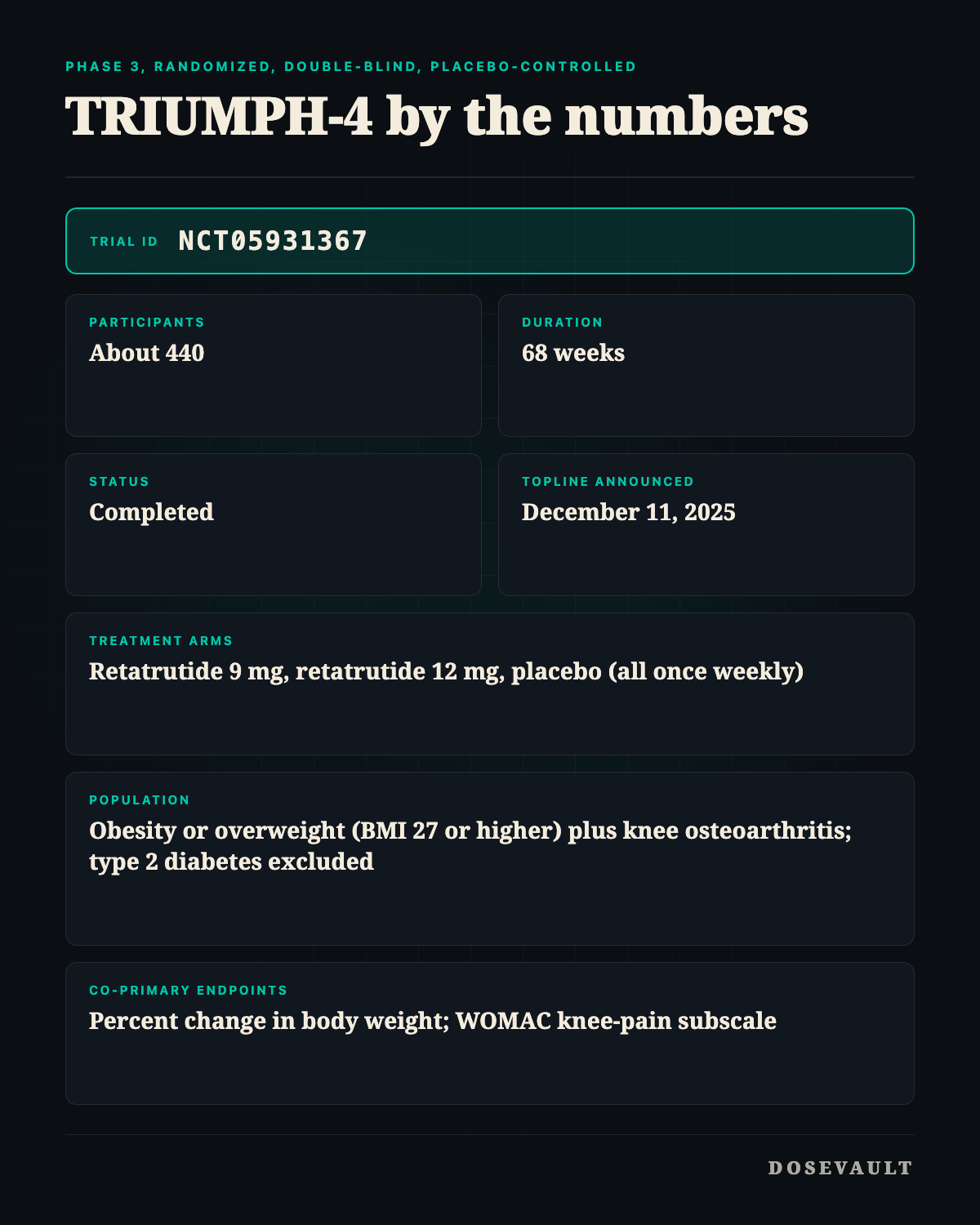
TRIUMPH-4 enrolled adults with obesity (BMI of 30 or above) or overweight (BMI of at least 27 with at least one weight-related comorbidity) who also had a clinical diagnosis of osteoarthritis of the knee. Critically, participants with type 2 diabetes were excluded, keeping the population distinct from other TRIUMPH arms.
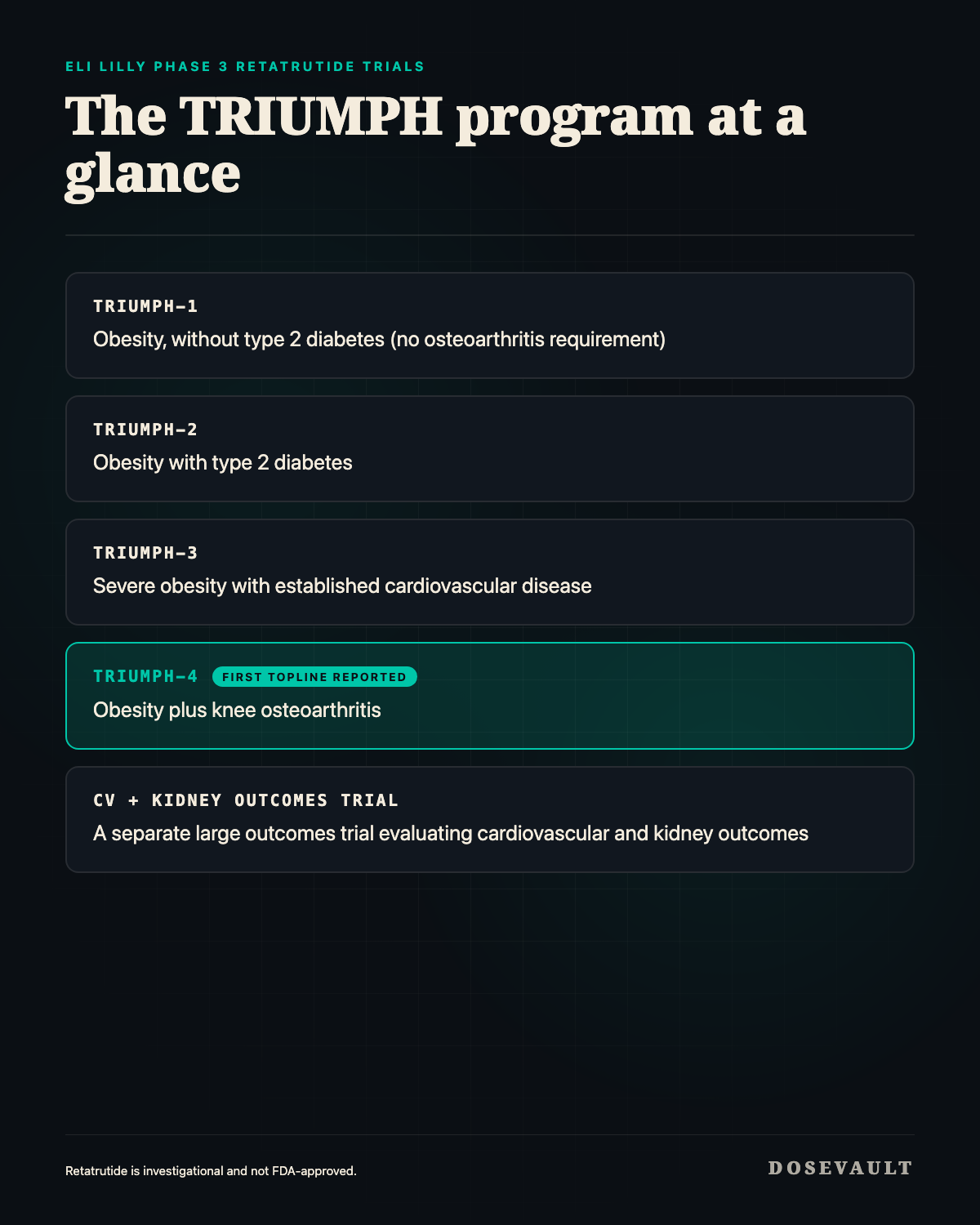
To place TRIUMPH-4 in context within the broader program:
- TRIUMPH-1 studies obesity without type 2 diabetes (no osteoarthritis requirement).
- TRIUMPH-2 studies obesity with type 2 diabetes.
- TRIUMPH-3 studies severe obesity with established cardiovascular disease.
- A separate large outcomes trial is evaluating cardiovascular and kidney outcomes.
TRIUMPH-4 is the only standalone knee osteoarthritis trial in the TRIUMPH program. Its rationale is straightforward: obesity is a leading driver of knee osteoarthritis progression, and a therapy that reduces body weight substantially might also reduce joint pain and functional limitation.
Trial design and endpoints
TRIUMPH-4 was a Phase 3, randomized, double-blind, placebo-controlled trial with approximately 440 participants. Three arms were tested:
| Arm | Target dose | Regimen |
|---|---|---|
| Retatrutide | 9 mg once weekly | Fixed dose-escalation up to 9 mg |
| Retatrutide | 12 mg once weekly | Fixed dose-escalation up to 12 mg |
| Placebo | -- | Matched injections |
Participants received treatment for 68 weeks. Both retatrutide arms used a fixed dose-escalation schedule to reach their respective target doses; specific weekly step doses were not publicly disclosed in the protocol summary.
The trial had two co-primary endpoints:
- Percent change in body weight from baseline to week 68.
- Change in knee pain from baseline to week 68, measured by the Western Ontario and McMaster Universities Arthritis Index (WOMAC) pain subscale, a validated patient-reported outcome scale for osteoarthritis.
Key secondary endpoints included the proportion of participants achieving body-weight reductions of at least 10, 15, 20, and 25 percent, as well as improvements in physical function as measured by the WOMAC physical function subscale.
Timeline and status
- Start date: August 2023
- Primary completion: November 2025
- Trial status: Completed
- Topline results announced: December 11, 2025 (Eli Lilly investor press release)
Full results, including detailed efficacy and safety data, are expected to be presented at a future medical conference and submitted for peer-reviewed publication. As of mid-2026, peer-reviewed numbers are not yet available; the figures below come from the company-reported topline announcement.
What the topline results showed
The following figures are company-reported topline data from Eli Lilly's December 11, 2025 press release. They have not yet been published in a peer-reviewed journal and are subject to change.
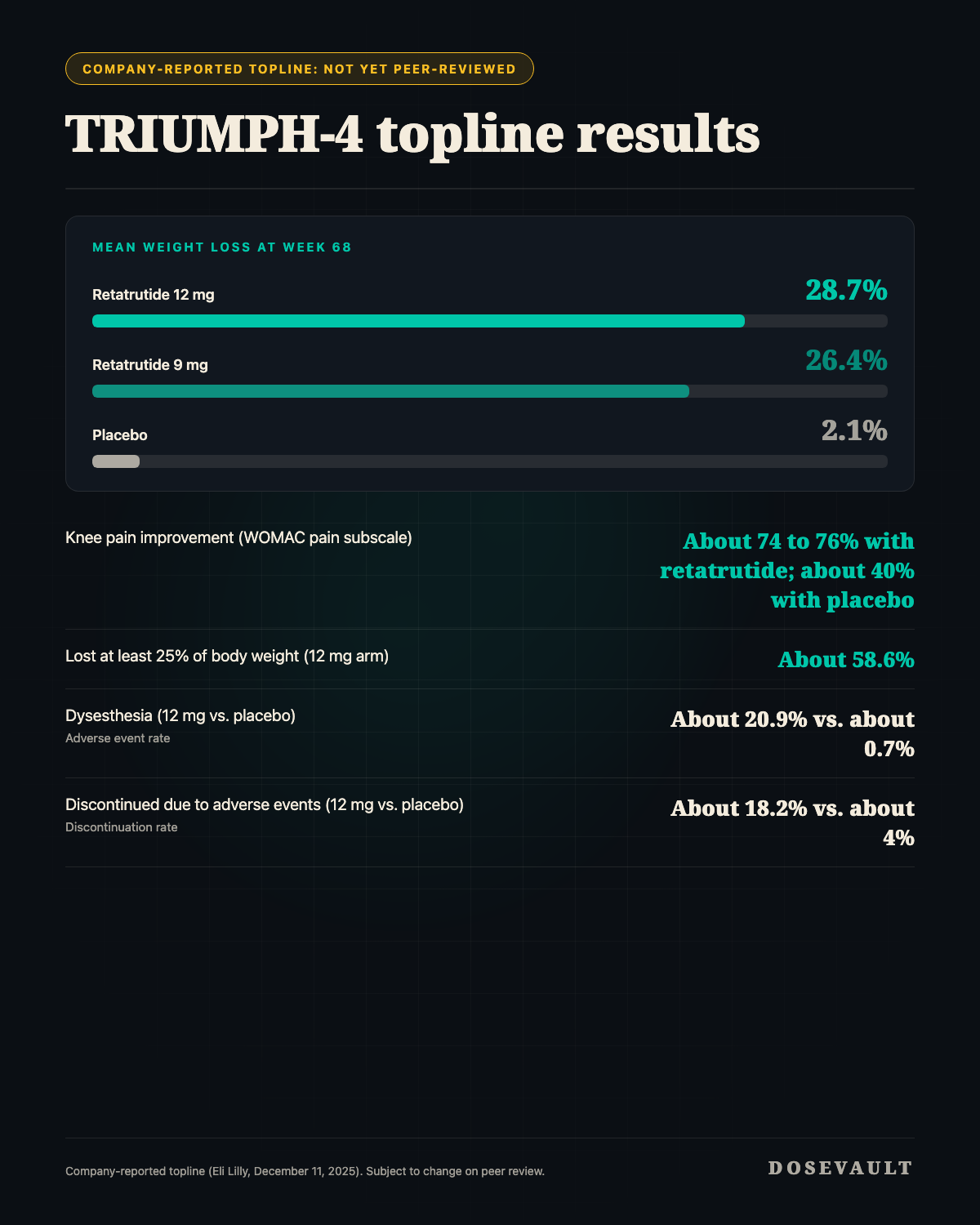
Weight loss at week 68 (mean percent change from baseline):
| Arm | Mean weight reduction |
|---|---|
| Retatrutide 9 mg | Approximately 26.4% |
| Retatrutide 12 mg | Approximately 28.7% |
| Placebo | Approximately 2.1% |
Both retatrutide doses met the co-primary weight endpoint with statistical significance versus placebo.
Knee pain (WOMAC pain subscale):
Retatrutide produced substantially greater reductions in knee pain than placebo. Lilly reported roughly a 74 to 76 percent improvement in WOMAC pain scores on the retatrutide arms, compared with approximately 40 percent on placebo. Both arms also met the co-primary pain endpoint versus placebo.
Weight-loss responder rates:
On the 12 mg dose, approximately 58.6 percent of participants lost at least 25 percent of body weight, a threshold rarely reached with earlier obesity medications.
Tolerability:
The safety profile was broadly consistent with the GIP/GLP-1/glucagon receptor class. The most common adverse events were gastrointestinal: nausea, diarrhea, and constipation. A notable finding specific to this trial was dysesthesia (an abnormal or unpleasant skin sensation) reported in approximately 20.9 percent of participants on the 12 mg dose versus approximately 0.7 percent on placebo. Discontinuation due to adverse events was higher on retatrutide than on placebo: approximately 18.2 percent on the 12 mg arm versus approximately 4 percent on placebo.
These are preliminary figures. The tolerability picture may be refined once full data are peer-reviewed.
Why it matters
TRIUMPH-4 is notable for two reasons. First, it was the first Phase 3 TRIUMPH trial to report topline results, providing early evidence on how retatrutide's substantial weight-loss effect translates to a clinically relevant comorbidity. Second, it addressed a population with both obesity and knee osteoarthritis, two conditions that reinforce each other: excess weight accelerates joint degradation, and joint pain limits the physical activity needed for weight management. Demonstrating meaningful improvement on both co-primary endpoints strengthens the case that retatrutide's weight loss carries functional benefits beyond the scale, though peer review and regulatory evaluation will be the definitive tests.
If you are modeling compounded retatrutide dosing, see our retatrutide titration calculator for dose-escalation reference tools. Additional compound context is available on the retatrutide directory page.
Sources
- ClinicalTrials.gov record, NCT05931367: https://clinicaltrials.gov/study/NCT05931367
- Eli Lilly topline press release, December 11, 2025: https://investor.lilly.com/news-releases/news-release-details/lillys-triple-agonist-retatrutide-delivered-weight-loss-average
- TRIUMPH program design paper: Giblin K, et al. Diabetes, Obesity and Metabolism. 2025. PMID 41090431. https://doi.org/10.1111/dom.70209
- Retatrutide Phase 2 obesity trial: Jastreboff AM, et al. N Engl J Med. 2023;389(6):514-526. PMID 37366315. https://doi.org/10.1056/NEJMoa2301972
Disclaimer
This is educational content, not medical advice. Retatrutide is an investigational compound and is not FDA-approved. Use outside an FDA-approved indication requires licensed-physician oversight. The TRIUMPH-4 figures above are company-reported topline data and may change on peer-reviewed publication. DoseVault is independent and unaffiliated with Eli Lilly.
Not medical advice
Information on DoseVault is for educational purposes only and is not a substitute for medical advice, diagnosis, or treatment from a qualified healthcare provider.